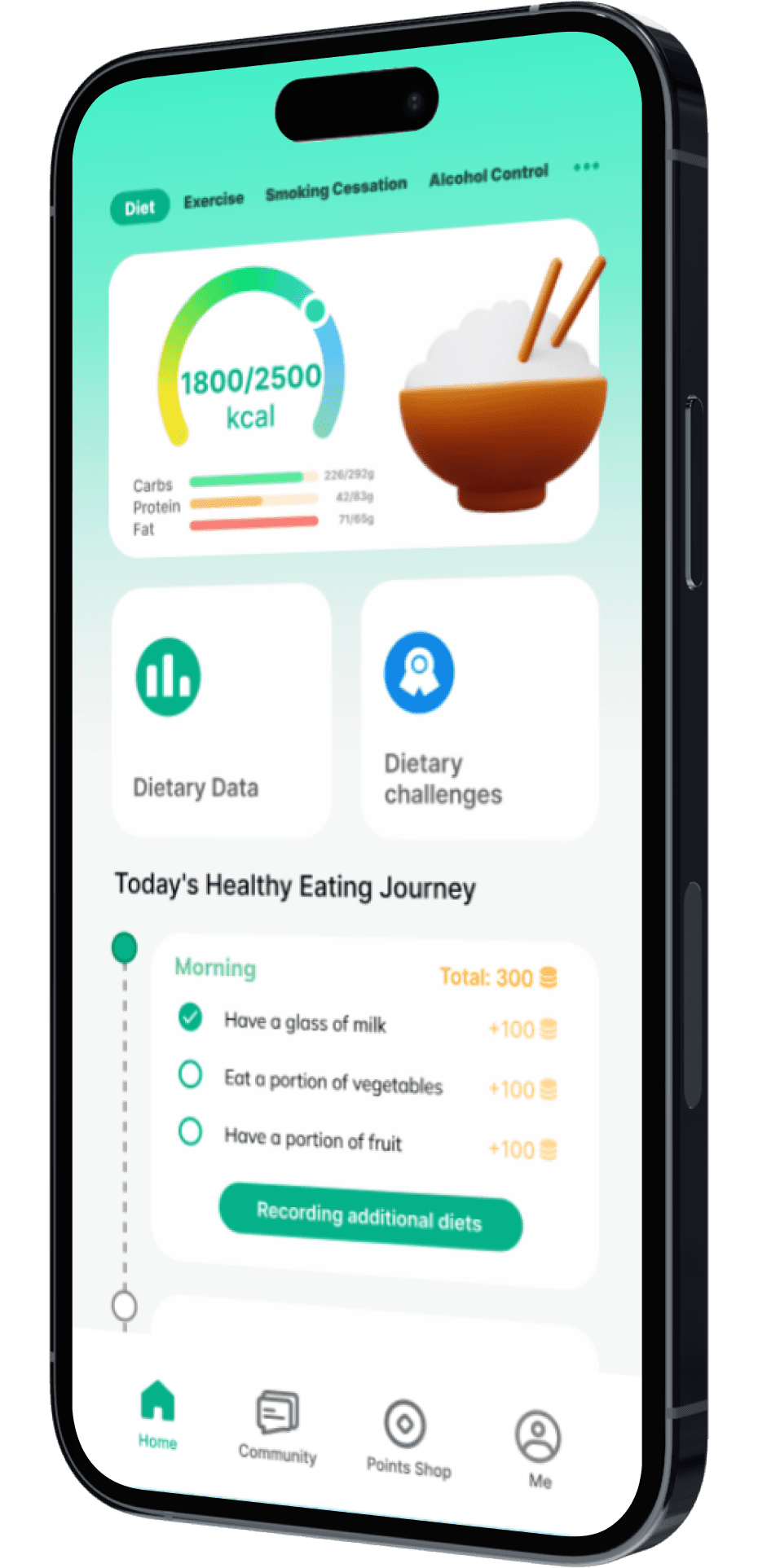
A gamification healthy lifestyle application
Go from design to site with Framer, the web builder for creative pros.
Learn More
Get Started




Design Process
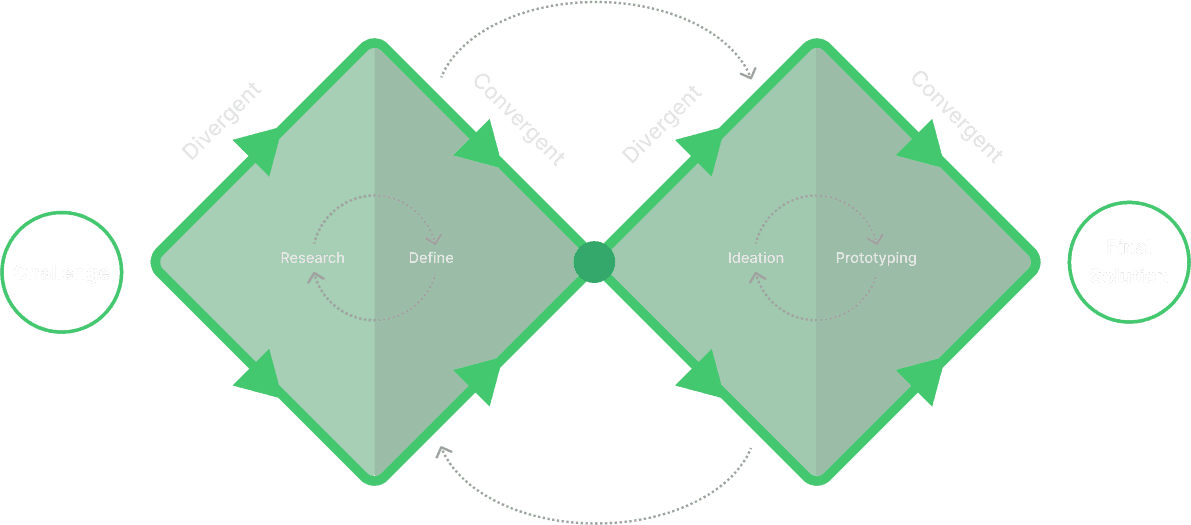
Follow the design process of the Double Diamond model to ensure a true understanding of the problem and thoroughly test the solution
The design process for this project will utilise the UK Design Council's Double Diamond Model, a framework widely used in the field of design thinking. The model emphasises the concept of user-centred design. It consists of four distinct phases: Discovery, Definition, Development and Delivery, each representing a specific stage in the design process.
Desk research
User research
Affinity diagrams
Discover
Define
Develop
Deliver
Persona
Customer Journey Map
High-fidelity Prototype
Usability testing
Wireframes
Information Architecture
Crazy 8s
Desk Research 01
Establish a basic knowledge of project-related areas by researching background information
While looking at background information on NCDs, we are also looking at key modifiable behavioural risk factors for NCDs as well as current issues and challenges.
Non-communicable diseases (NCDs) are the leading cause of death in the world today
The World Health Organisation (2022) states that non-communicable diseases (NCDs) are the leading cause of death in the world today, mainly cardiovascular diseases, cancers, chronic respiratory diseases and diabetes, which are closely linked to people's lifestyles.
Annual deaths from NCDs
Other causes
74%
41 million
Key modifiable behavioural risk factors for non-communicable diseases
Key modifiable behavioural risk factors for NCDs include, for example, tobacco use, unhealthy diet, physical inactivity and alcohol abuse.
• Tobacco is responsible for more than 8 million deaths per year (including deaths caused by exposure to second-hand smoke).
• 1.8 million deaths per year can be attributed to excessive salt/sodium intake.
• More than half of the 3 million deaths per year attributable to harmful use of alcohol are due to non-communicable diseases, including cancer.
• There are 830,000 deaths per year attributable to physical inactivity.
Annual deaths from NCD risk factors
Tobacco use
0
2 million
4 million
6 million
10 million
8 million
Physical inactivity
Excess salt/sodium intake
Harmful alcohol use
Problems and challenges
Prevention through the development of a range of responses will make it possible to reduce premature deaths from NCDs. While we have recognized the impact of these modifiable behavioural factors on NCDs, there are a number of issues and challenges to changing people's unhealthy behaviours.
Insufficient participation
Despite the resources and interventions invested by the Government and the health sector that are in place, low participation and adherence rates are frequently reported.
cognitive deficit
There is a lack of health knowledge and awareness of the importance of a healthy lifestyle and how to adopt positive health behaviours.
Lack of motivation
A significant barrier to behavioural change is the lack of intrinsic and extrinsic motivation, and individuals may struggle to adopt and maintain healthier lifestyles.
sustainability
The process of changing an individual's unhealthy behaviour is one that requires sustained effort. Many people have difficulty staying the course over time.
Desk Research 02
Provide the necessary theoretical support for the project by examining the literature on gamification
An in-depth understanding of the origins, development history, core concepts and key principles of gamification theory provides important theoretical support and guidance for subsequent design.
Gamification
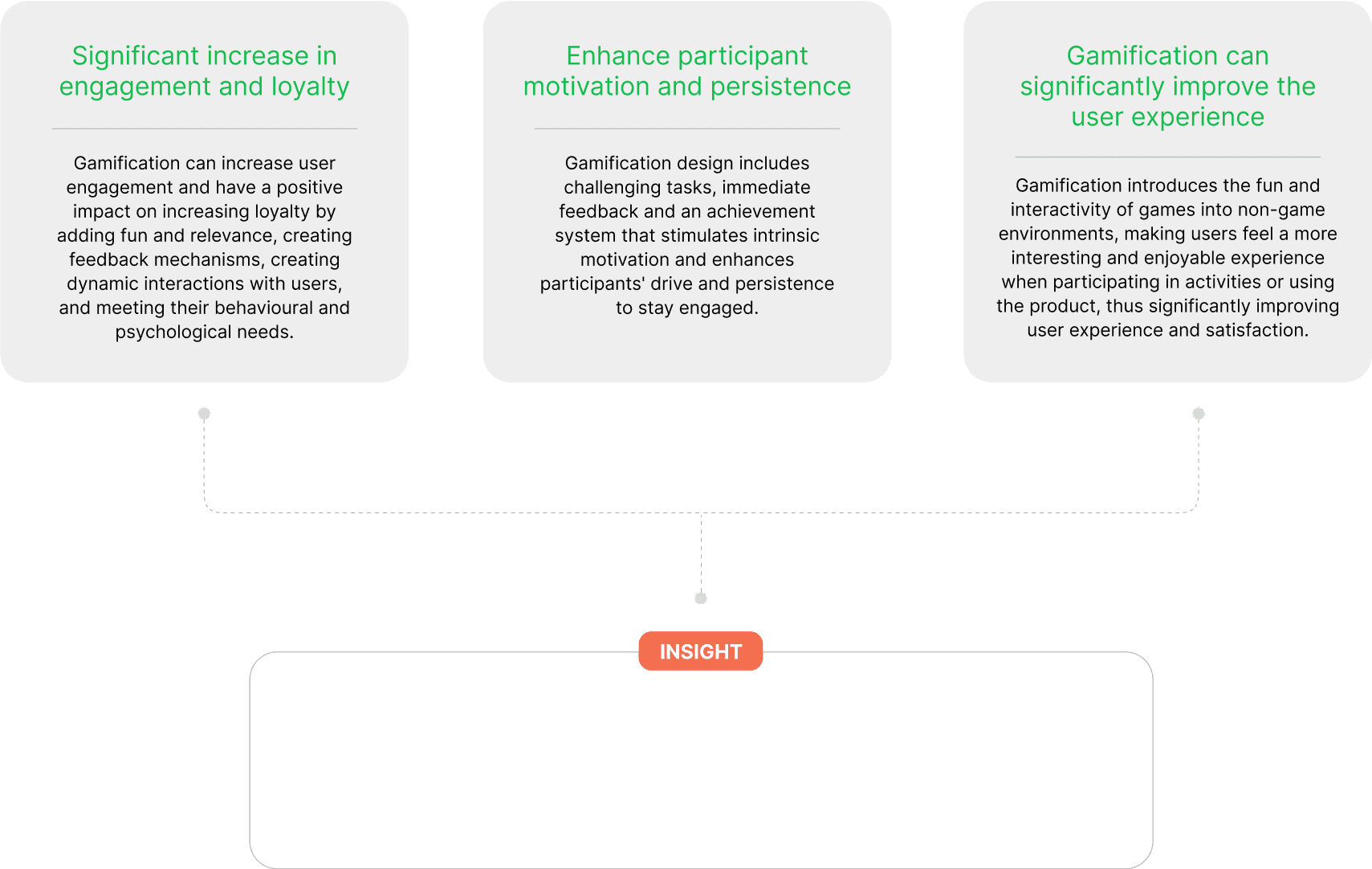
The theory of gamification is widely used in various fields. One of the earliest and most popular definitions is provided by Deterding et al. (2011), who define gamification as ‘the use of game design elements in non-game environments’. This definition emphasises the integration of game elements and mechanics into systems or activities that are not traditionally associated with games. In addition, the definition emphasises that game mechanics are applied to enhance user engagement and user experience.
The most common game element elements elements of gamification include challenges, rewards, competition, hierarchies, achievement systems, role-playing, and more.
Tasks and challenges
achievement
role-playing
ranking
reward
competitiveness
Project Objective
Design a personal healthy lifestyle app and apply gamification design to promote users to improve their unhealthy behaviours and enhance their engagement in healthy lifestyles such as eating habits and physical activity.
User Research
In order to gain a deeper understanding of our target user group and build empathy, we conducted user research to drive our planning phase
In order to gain a deeper understanding of users' needs, pain points, behavioural patterns and expectations, this project adopts user interviews as the core user research methodology.Problems are identified through user research in order to guide the design of subsequent products, which helps to develop products that are more in line with users' expectations.
User interviews are a common user-centred design (UCD) method of user research, in which a purposeful, planned and methodical verbal conversation is used to understand users' needs, experiences and expectations.In this project, semi-structured interviews were used as the data collection method, in which the interviewer had a set of pre-determined questions or themes, but was also given the flexibility to ask follow-up questions and explore new areas of interest that emerged during the interview process in order to explore the respondent's perspectives, experiences, and opinions in greater depth. The questions for the interviews were designed to take into account a number of areas such as past experiences, motivations, behaviours, pain points, expectations and perceptions of feedback and reward mechanisms.
Semi-structured user interview
Participants were recruited primarily on university campuses. Participant inclusion criteria were age 18 years and over.Participants needed to be within the UK. Participants should not have any special health conditions such as disabilities or chronic illnesses. The project is looking for participants who are individuals who are interested in healthy lifestyles and have a diverse background of experience. The study encourages participation from those who already have some knowledge of health and are willing to explore new ways to optimise their lifestyle. At the same time, people who have a strong interest in healthy lifestyles but lack the relevant knowledge and experience are also welcome in the study. After screening, three eligible participants were finally invited to participate in the interviews.
interviewees
Which of the following categories do you fall under?
Have you used any digital services or apps to manage or enhance your healthy lifestyle?
Areyou still consistently using these digital services or apps?
Howwould you rate the experience and efficacy of these digital services or apps?
Whyare you inclined to use a healthy lifestyle app?
Pleasedescribe your process when using such digital services or apps.
In which scenarios do you typically use these digital services or apps?
What challenges or difficulties have you encountered while adoptingor maintaining a healthy lifestyle?
Whatare your expectations from a personal health lifestyle digital app?
What features would you like to see that cater to your health needs?
What are your thoughts on motivational measures, and how do they influence your participation and enthusiasm?
Which feedback mechanisms do you believe assist you inenhancing your healthy lifestyle?
• Beginner (Interested in a healthy lifestyle, but lacks knowledge and experience, might need basic guidance and support to start their health journey)
• Sustainer (Already has adopted some steps of a healthy lifestyle and wishes to maintain it long-term, needs ongoing motivation and feedback to continue)
• Others (Please specify)
Q1
Q2
Q3
Q4
Q5
Q6
Q7
Q8
Q9
Q10
Q11
Q12
Pastexperience or product usage
Motivation
Behavior
Pain Points
Expectations
Perspectives on Feedback & RewardMechanisms
Question No.
Interview questions
Focus
3
Completed interviews
20
minutes
Interview duration
The interview took place on Zoom

Affinity Diagram
Following the semi-structured interviews, we analysed the qualitative data using Affinity Diagram, where we extracted key sentences or ideas, grouped similar responses, and presented key insights
The extracted key sentences or ideas are categorised and organised according to relevance, and each group is next analysed to summarise the main findings. This helps to better understand user needs and behaviours and provides guidance for further design and development work.
Expectations and needs
Motivation
Pain points and challenges
Perspectives on feedback and incentives
Past experience with products or services
Usage Scenarios
Hope to get professional guidance
I want to develop good habits
Lack professional knowledge when starting out
Incentive measures are effective and enhance my enthusiasm
Used this type of health management mobile app before
Clear-logic apps offer better user experience
A clean interface makes for a good experience
Smart health plan recommendations enhanced my experience
App is cumbersome and not a good experience
don't have much patience to delve into these apps
Use health apps at home and at the gym
Use it in the office during work hours
Use these apps at home
Social aspects, levels, online leaderboards, and data recording mechanisms help me
Incentive measures have a positive impact on my participation
Encouragement from friends helps me maintain long-term commitment
Incentive mechanisms are crucial for maintaining my motivation
Want continuous positive feedback
Physical rewards can also motivate
Don't know how to start
Hard to stick to it for a long time
Maintaining healthy lifestyles is boring
Feel lost
aware of a healthy lifestyle
Want to stick to it in the long term
Help me develop healthy habits
I need to rectify poor lifestyle choices and behaviors
I have specific goals
Hoping for an interesting experience
The guidance should be scientifically based
Content should be easy to understand and interesting
Clearly see my daily goals
Key Insight
A personalised starter guide is provided to guide users step-by-step through the importance of a healthy lifestyle and advise them to start with simple changes and gradually increase the challenge.
Provides an easy-to-follow healthy lifestyle programme with actionable daily action steps and goals to help users build healthy habits.
Streamline the user interface to make it easy to understand and use, reducing user hesitation and doubt about functionality.
Provide personalised challenges and goals, community support and a reward system that allows users to feel valued for their participation and a sense of belonging, promoting long-term persistence.
Provides real-time progress tracking features, including statistics on health data, goal achievement, etc., as well as regular personalised progress reports and feedback, allowing users to have a clear understanding of their current status.
Problem 01
Solution
Solution
Solution
Solution
Solution
Problem 02
Problem 03
Problem 04
Problem 05
Lack of expertise on how to make a plan
Difficult to maintain over time
Unaware of their current progress
Feeling lost, not knowing how to start
Unwilling to take the time to research
Persona
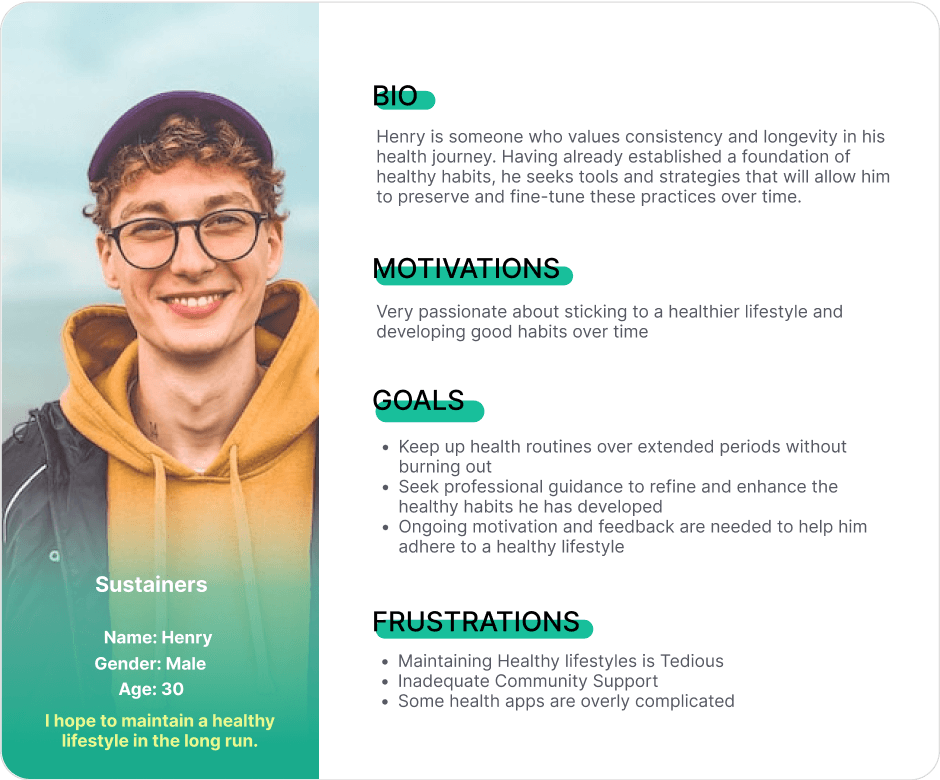
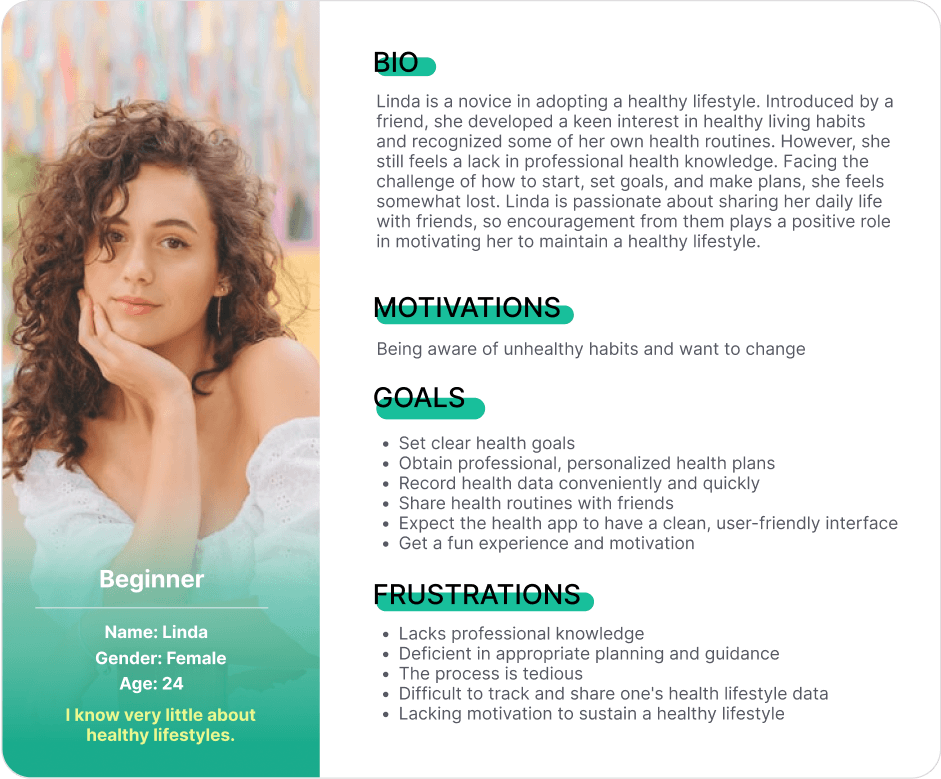
In order to gain a vivid and in-depth understanding of our target users, and to ensure that design decisions are made from the perspective of real users' needs and pain points, we have produced Personas
Based on the results of the analysis of the user study data, two main user groups were identified.
They were beginners, and healthy lifestyle maintainers. After understanding the main characteristics of these two user groups, personas were designed for each type of user.
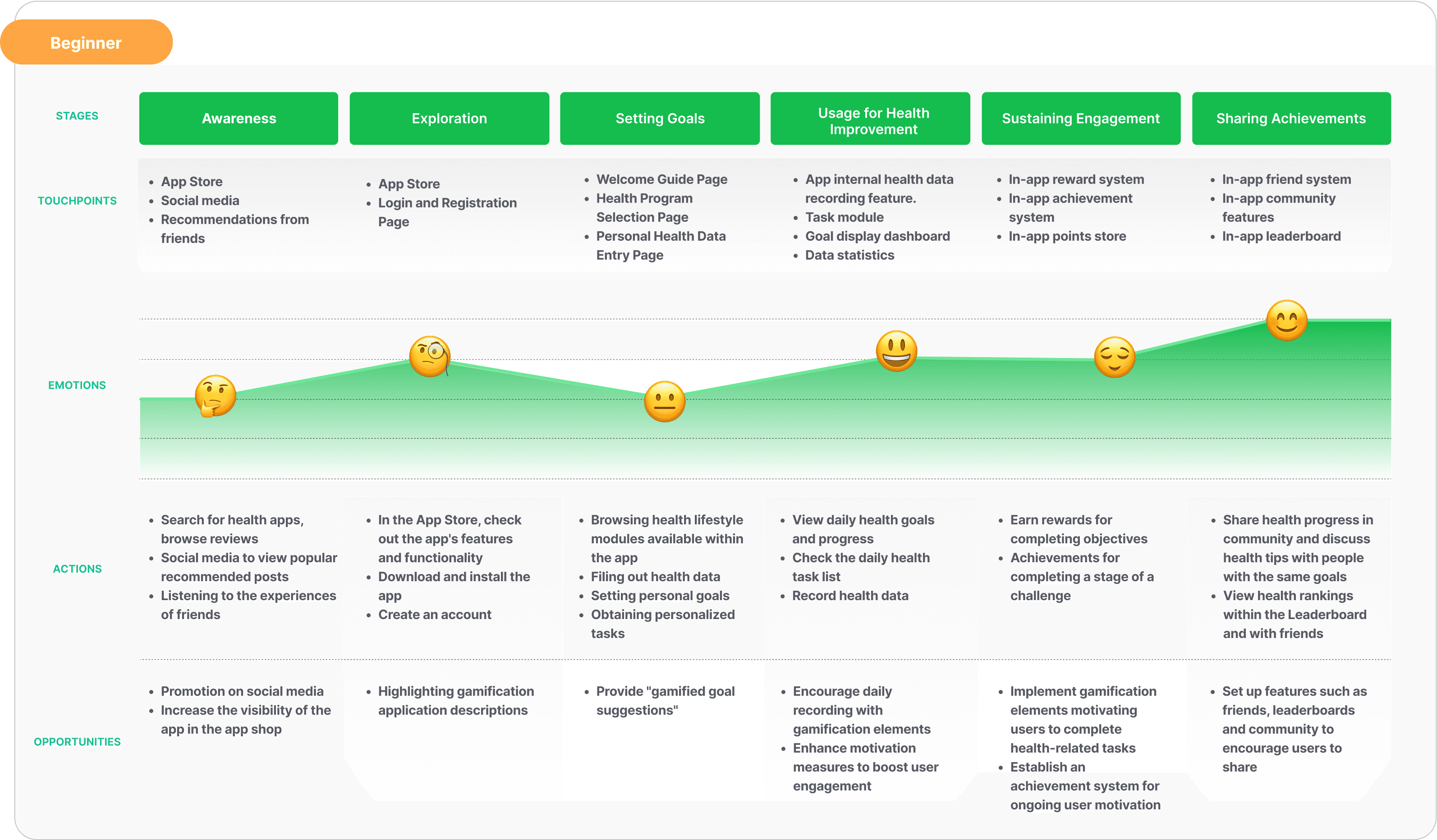
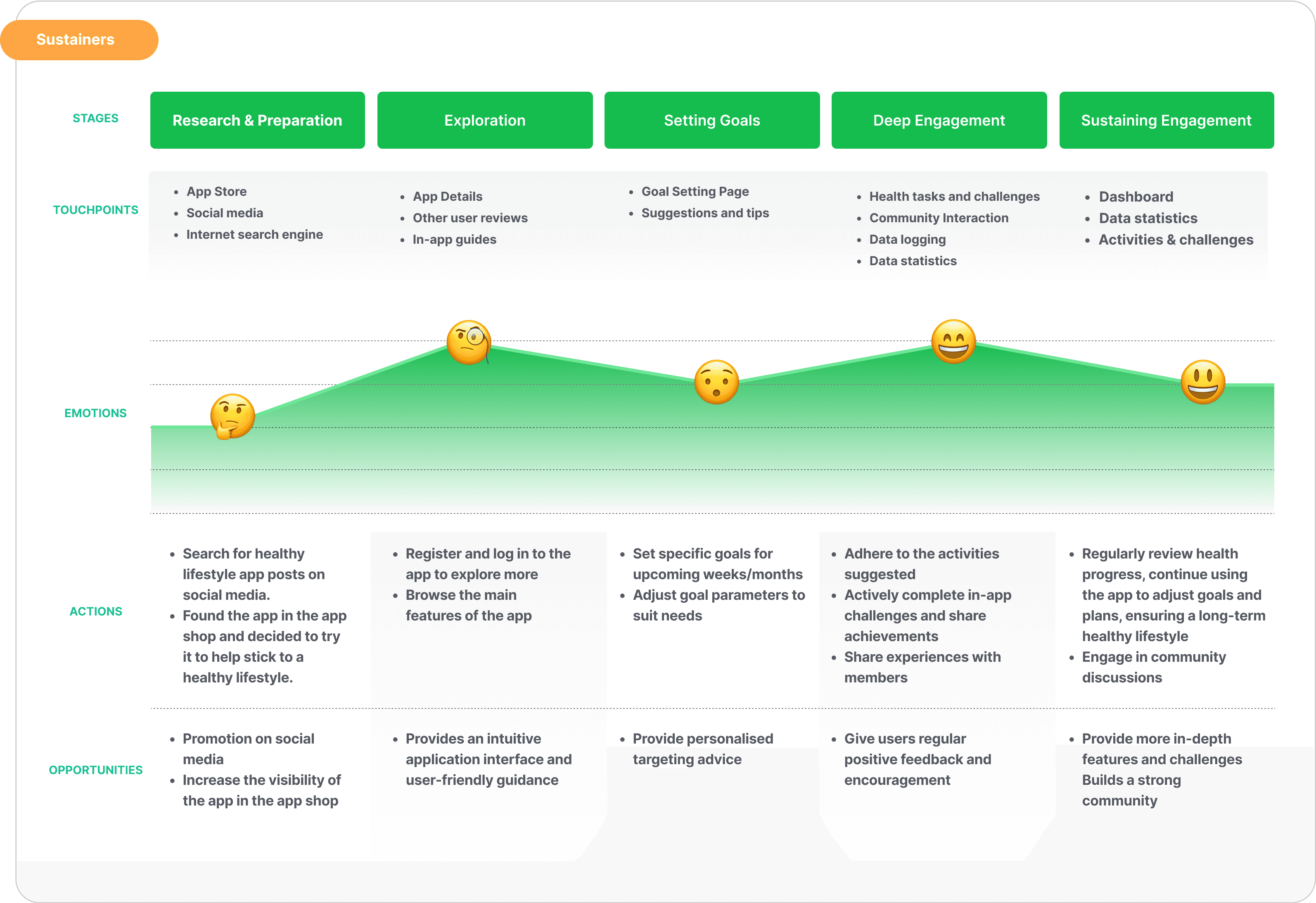
Customer Journey Map
Another integral step in understanding how users interact with a product or service is mapping the customer journey
Customer Journey Mapping (CJM) provides a holistic view of the user experience from the first contact to the long term. By visualising the various touchpoints users encounter, CJM highlights areas of delight, apathy and friction. This approach ensures that designers and stakeholders can identify opportunities to enhance and address pain points.
Information Architecture
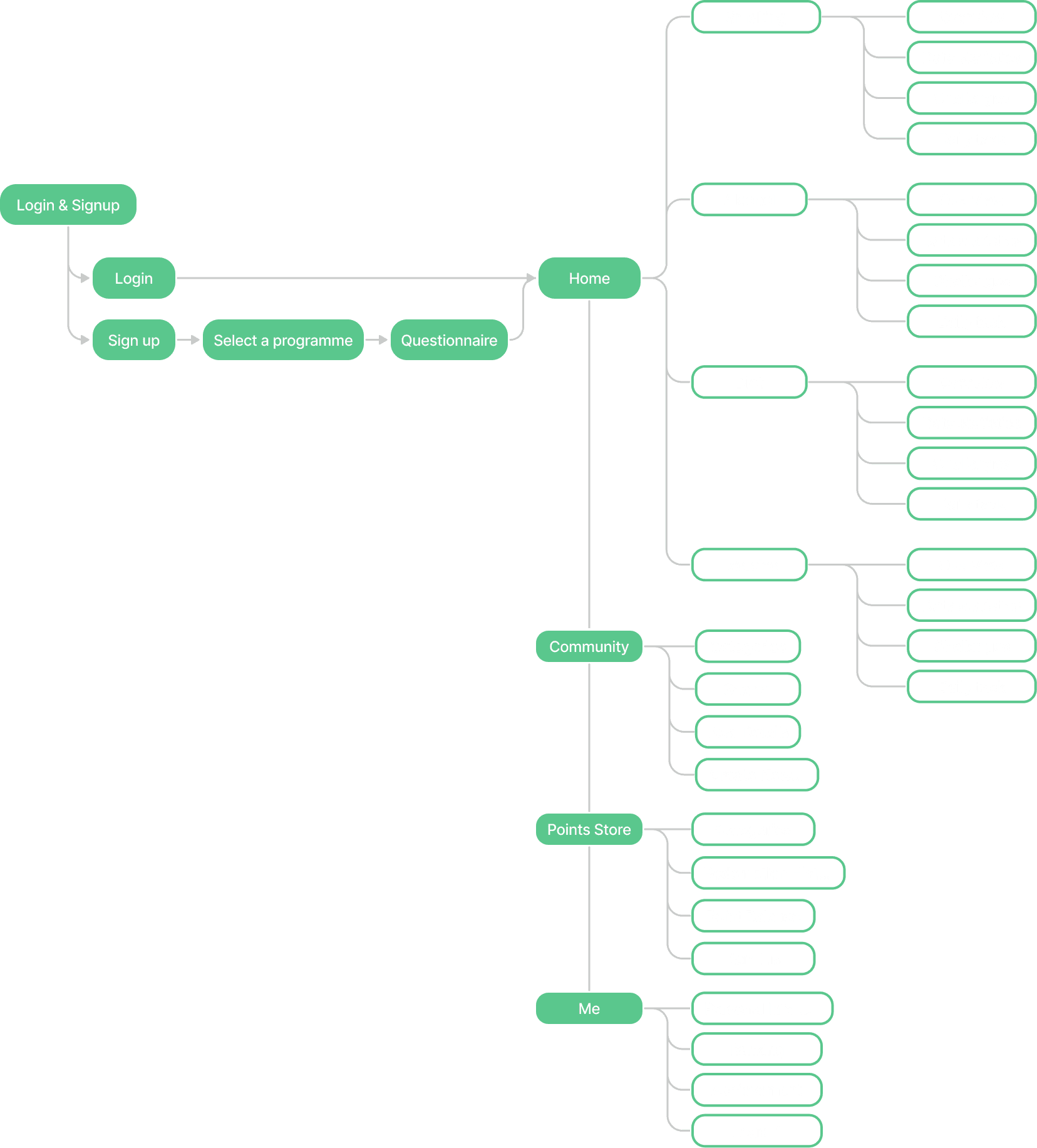
Develop an information architecture to ensure that users have the best possible user experience
At this stage we develop the information architecture (IA) of the product. It is a visual representation of the product's infrastructure, functionality and hierarchy. The IA defines every pathway and route a user can take through the application, it is more than just a site map showing where a page leads.
Crazy 8s
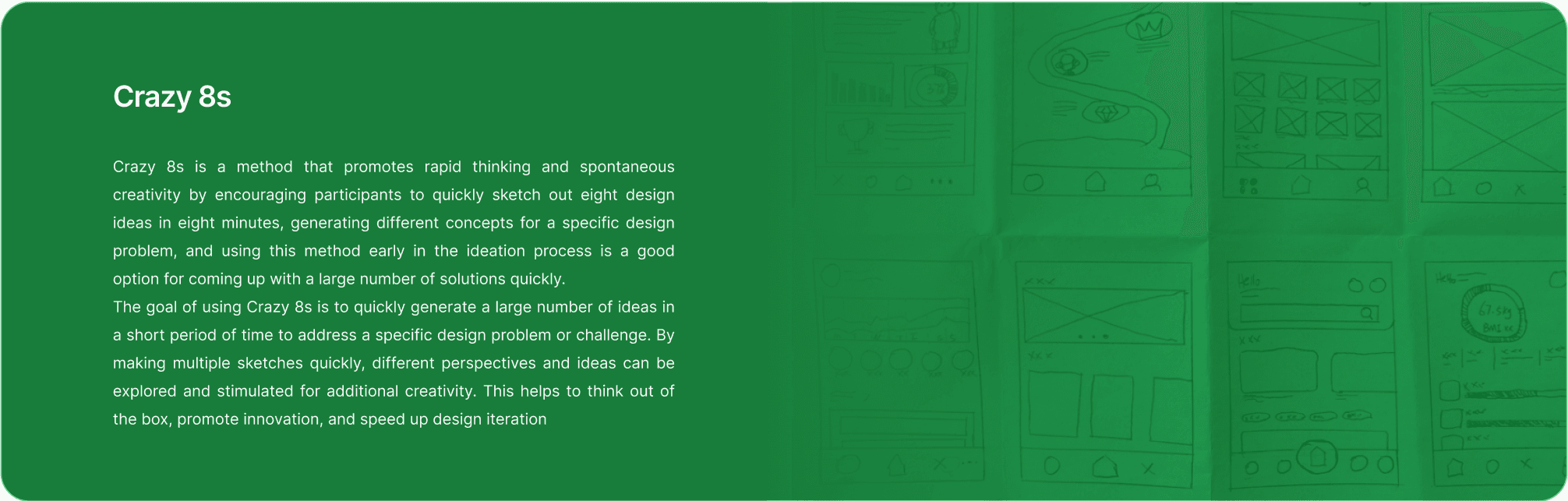
Generate a large number of conceptual solutions quickly with Crazy 8s
During the divergent thinking phase, Crazy 8s was able to generate a lot of ideas quickly, which helped us to think deeply and explore different design directions quickly.
Low-Fidelity Prototypes
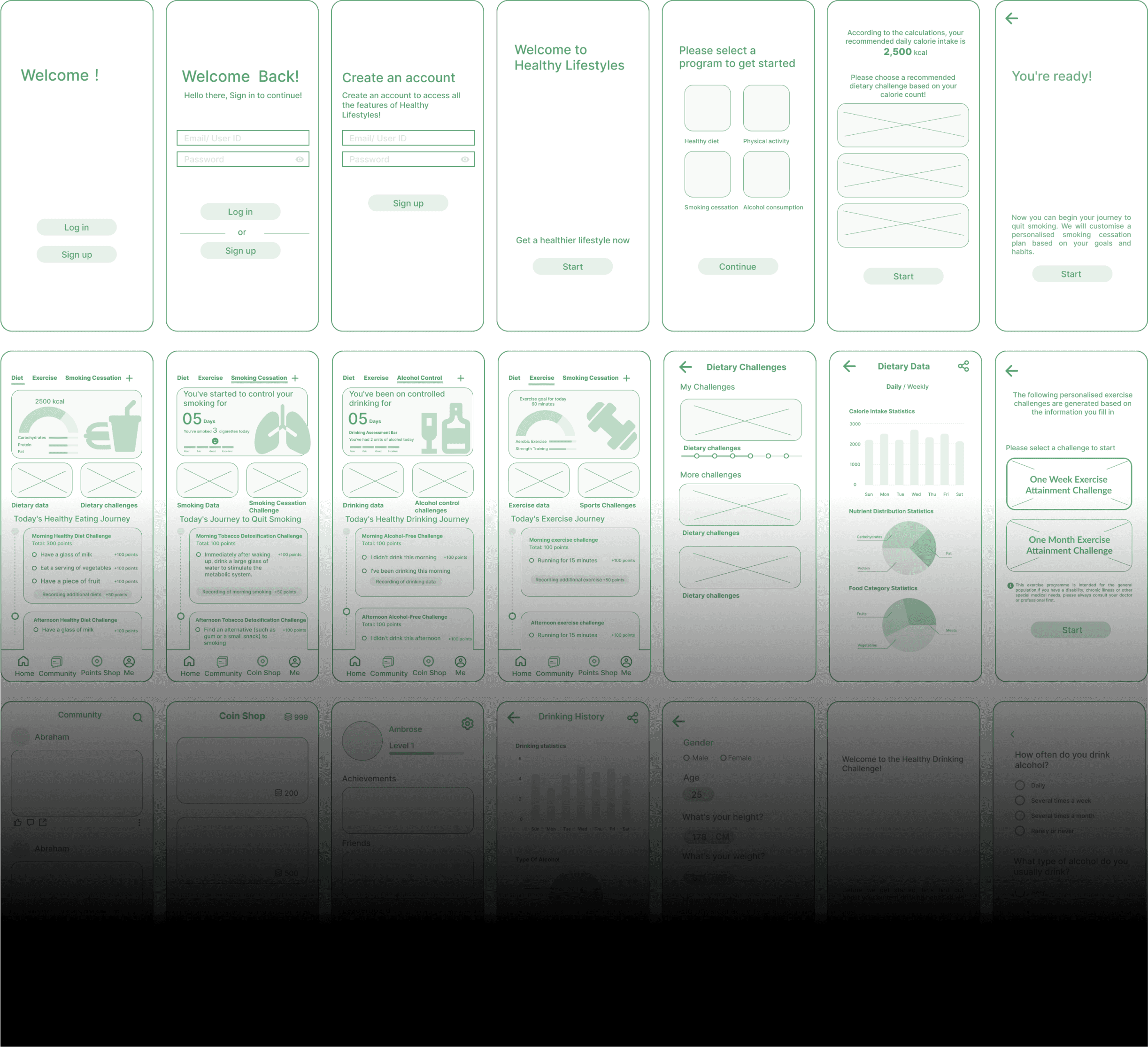
After a quick conceptualisation of the Crazy 8, the next step was to create a low-fidelity prototype to further refine the concept.
In order to quickly test design concepts in the early stages of design so that they can be improved in subsequent designs, a low-fidelity prototype is produced. It is a simplified form of design presentation that can be drawn on paper or on a computer and focuses primarily on functionality, interaction and information architecture rather than detail and final visual design. Digital wireframes can provide a quick, cost-effective, and easily modified way to present, test, and iterate on design concepts.
Usability Testing
After completing the design of the low-fidelity prototype, the next stage is to test the low-fidelity prototype to ensure that the prototype has resolved most of the usability issues before moving on to the high-fidelity design stage
At this stage we invited two evaluators with professional backgrounds in service design to conduct a heuristic evaluation of the low-fidelity prototype, which is a cost-effective way of identifying usability issues in the user interface at an early stage so that they can be addressed during the iterative process. This is an expert evaluation method where one or more evaluators independently examine the user interface and identify problems based on recognised usability principles.
Task 1:Login and Registration
Task 2: Experiencing Diet Module
Task 3: Experiencing Physical Activity Module
Task 4: Experiencing the Smoking Cessation Module
Task 5: Experience the Alcohol Control Module
Task 6: Experience Community Module
Task 7: Experience the Points Store
Task 8: Experiencing the ‘Me’ section
Help Users Recognize, Diagnose & Recover from Errors
Help & Documentation
Recognition Rather than Recall
Aesthetic & Minimalist Design
Flexibility & Efficiency of Use
Consistency & Standards
Visibility of System Status
User Control & Freedom
Error Prevention
Match Between System & the Real World
10 Usability Heuristics
Heuristic Evaluation Results
Visibility of system status
Task2: Plus Icons Create Confusion
2
3
3
5
4
2
N/A
N/A
2
N/A
N/A
N/A
N/A
N/A
N/A
N/A
N/A
N/A
N/A
3
2
N/A
N/A
4
No issues identified
No issues identified
Replace with a more appropriate icon
Optimise login and registration page
Add quick login option
Add categories to Points Store
Optimise login and registration page
Add Forgot Password Recovery Button
Add missing back button
Add action buttons to challenge page
Add quick post function
Addhistory of exchange in Points Store
No issues identified
No issues identified
No issues identified
No issues identified
Task6:Posts cannot be categorised
Task1:The login and registration page is cumbersome
Task1:Forgot password cannot be changed
No issues identified
Task5: Welcome page cannot return to previousstep
Task7: Unable to view exchange history
Task1:Cannot go back to previous step in registrationpage
Task2: Unable to edit change challenge
Task1:Lack of back button on login registrationpage
Task2:Questionnaire page can not return to the previous step
Task6:Unable to post
Task7: Unable to view exchange history
Task1:The login and register buttons are notdifferentiated, which is confusing
No issues identified
No issues identified
No issues identified
Task1:There is no option to retrieve forgotten password
No issues identified
Task1:No quick login option
Task7: Points shop can't be filtered by category
Match between system and the real world
User control and freedom
Consistency and standards
Error prevention
Recognition rather than recall
Flexibility and efficiency of use
Aesthetic and minimalist design
Help users recognize, diagnose, and recover fromerrors
Help and documentation
1
2
3
4
5
6
7
8
9
10
No.
Heuristic Principle
Evaluator 1 Observations
Evaluator 2 Observations
Evaluator 1 Severity
Evaluator 2 Severity
Combined Recommendations
High-fidelity Prototype
Further development of high-fidelity prototypes based on test results and user feedback
High-fidelity prototyping is a further evolution of low-fidelity prototyping, which provides a more refined and realistic representation of the appearance, functionality, and interaction details of the final product. With high-fidelity prototyping, it is possible to get a clearer picture of the product's appearance and functionality, and thus evaluate its experience more intuitively. In this phase, we improve and optimise the issues found in the testing phase.
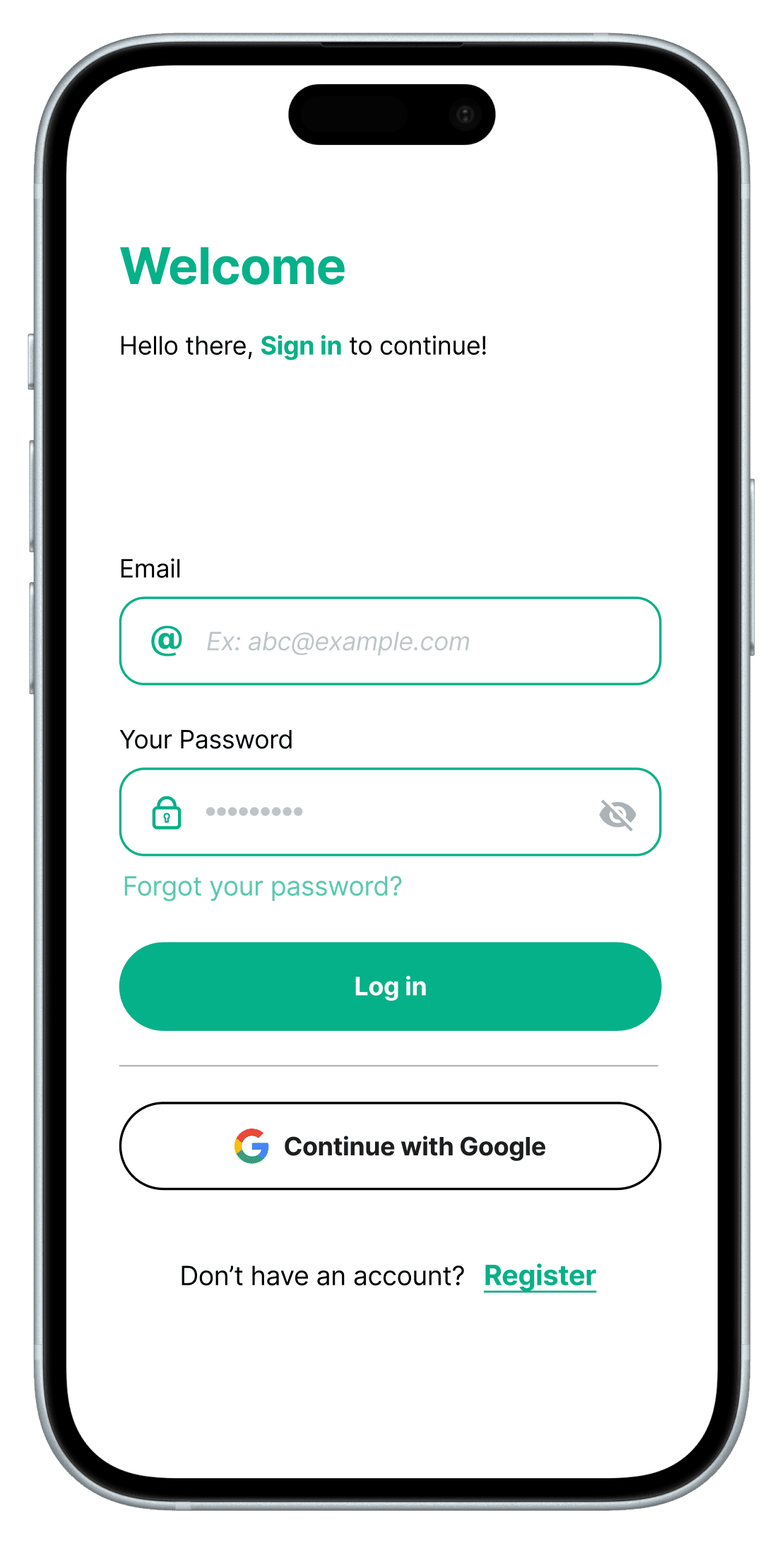
Login & Register
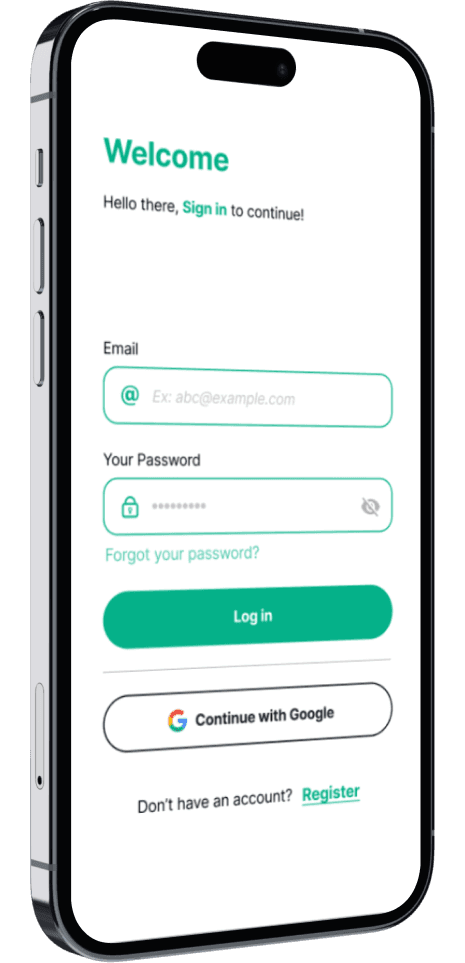
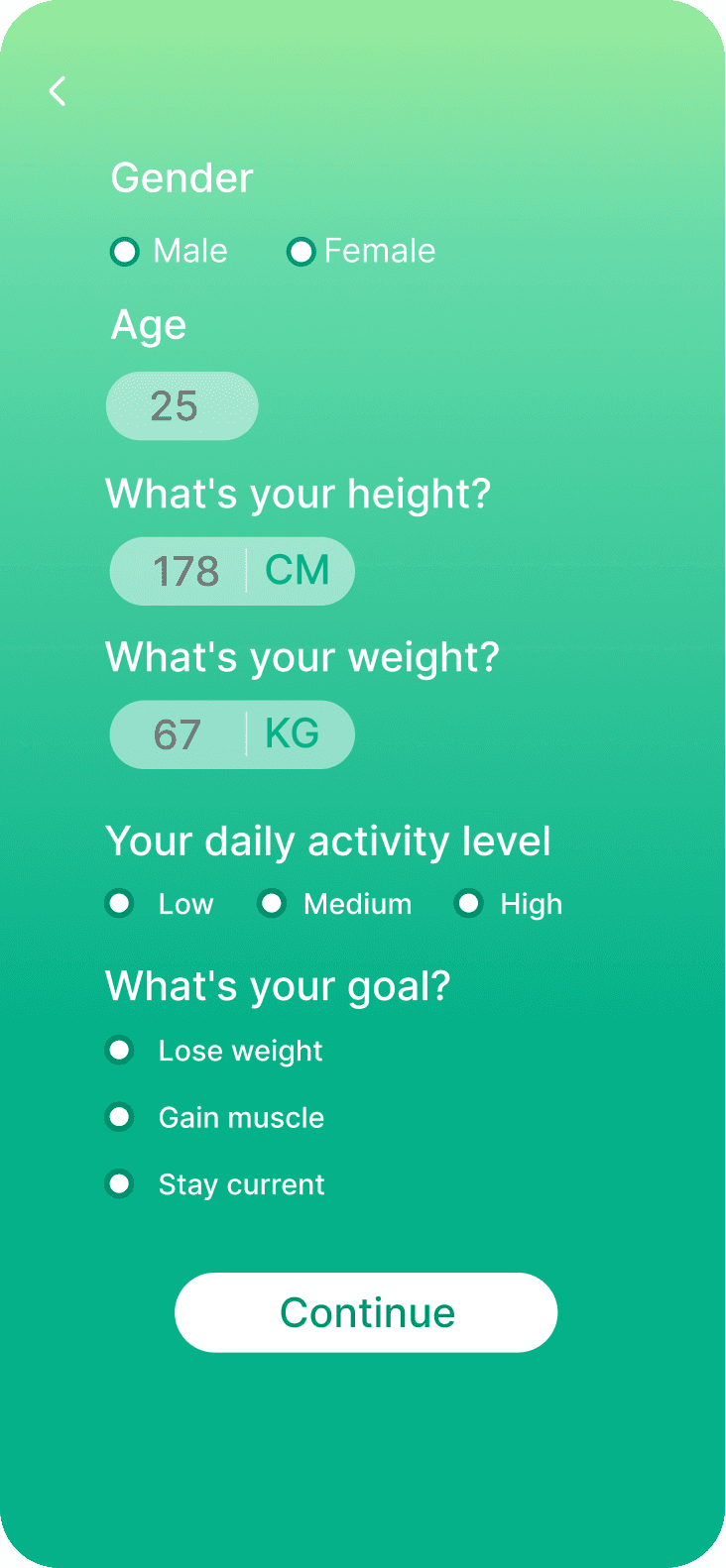
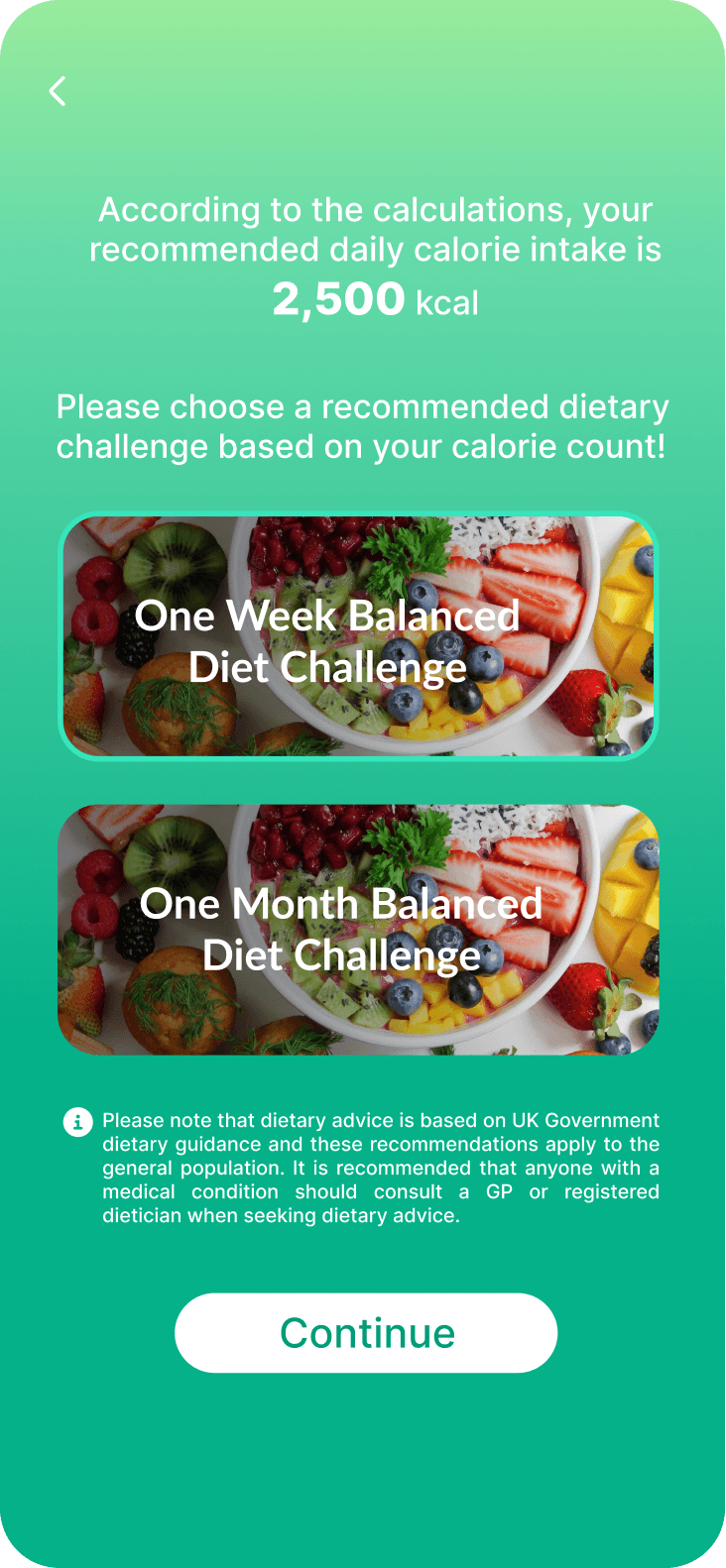
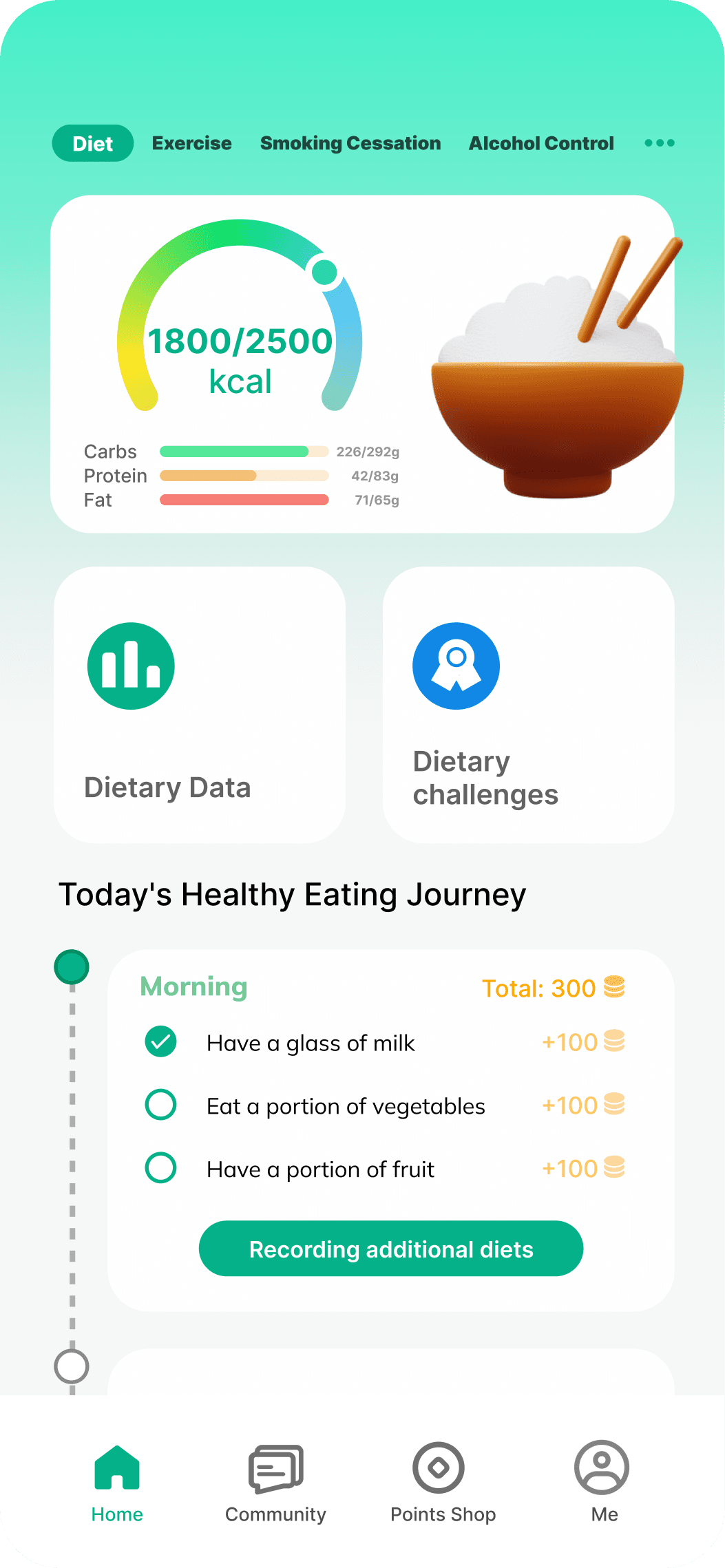
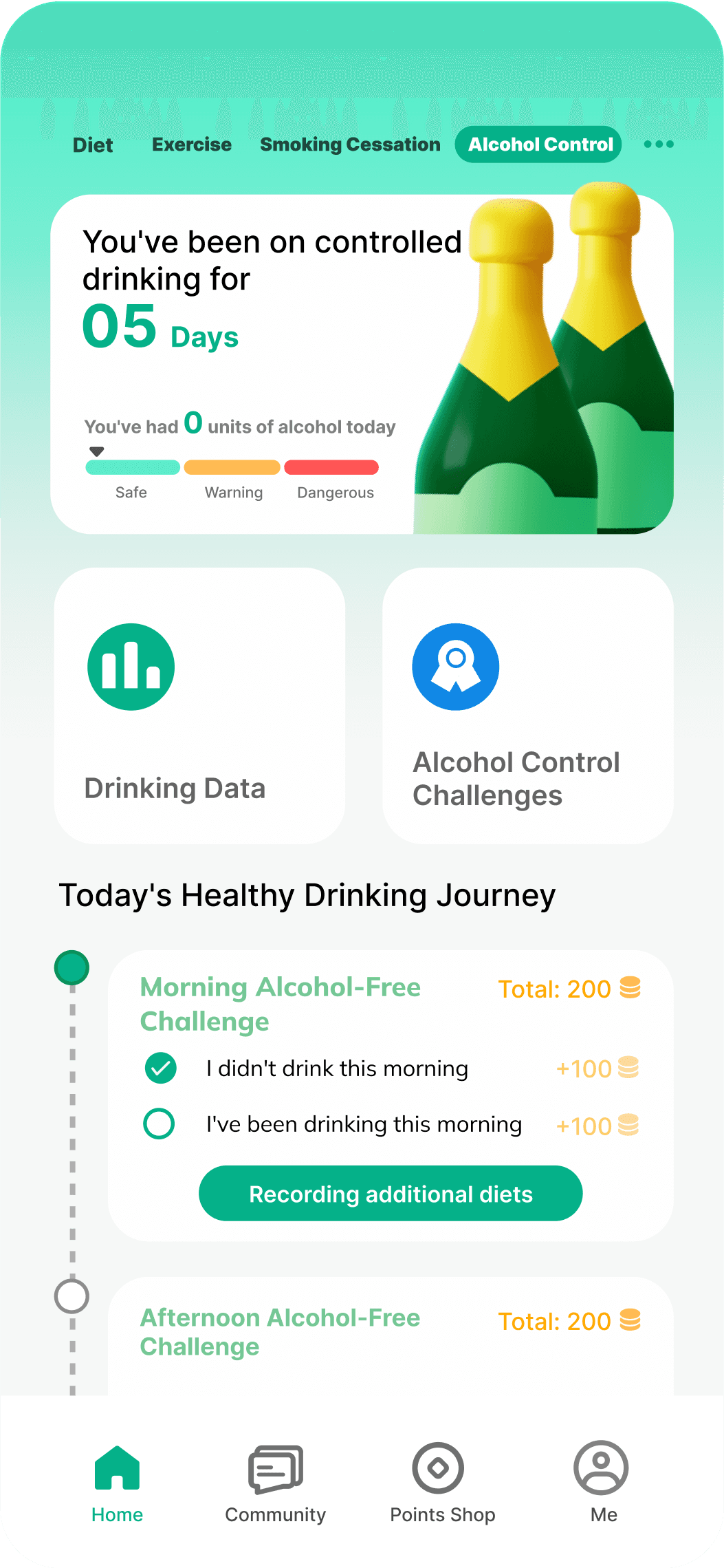
Users can sign in or register on this page and retrieve their passwords. In order to simplify the registration process, users are provided with the option to sign in quickly using their Google account. New users will be redirected to the guidance and questionnaire page after successful registration, while existing users will be redirected to the homepage after successful login.
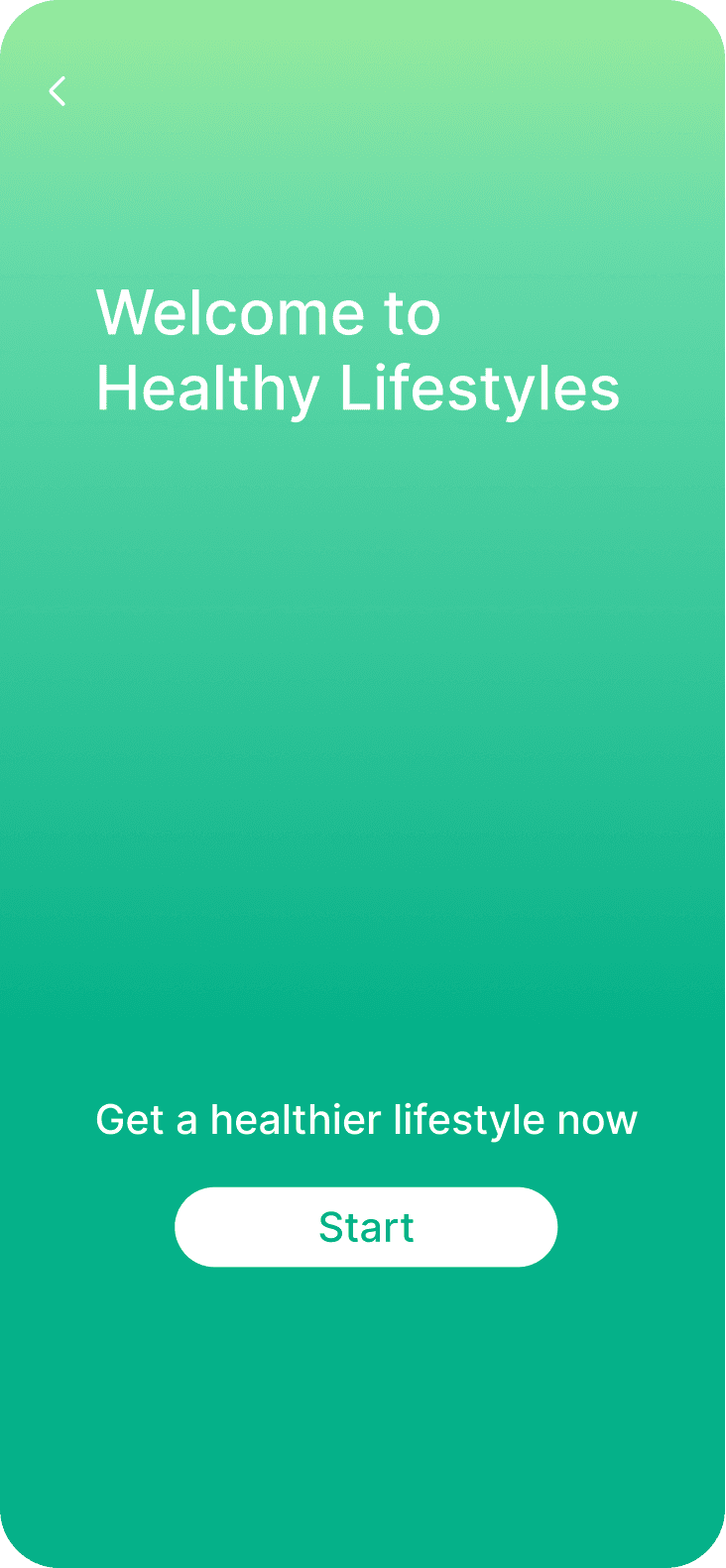
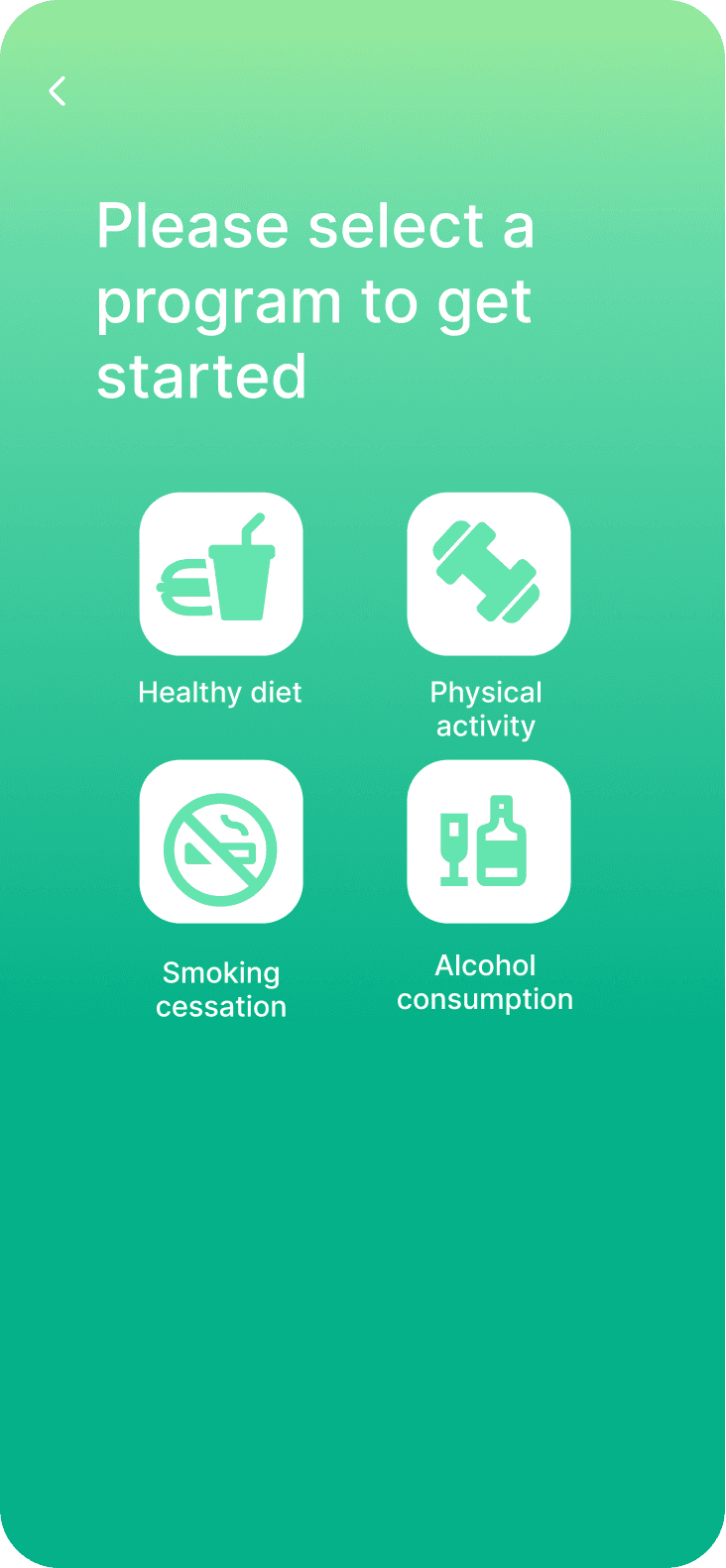
Login & Register
Users can sign in or register on this page and retrieve their passwords. In order to simplify the registration process, users are provided with the option to sign in quickly using their Google account. New users will be redirected to the guidance and questionnaire page after successful registration, while existing users will be redirected to the homepage after successful login.
Login & Register
Users can sign in or register on this page and retrieve their passwords. In order to simplify the registration process, users are provided with the option to sign in quickly using their Google account. New users will be redirected to the guidance and questionnaire page after successful registration, while existing users will be redirected to the homepage after successful login.
Login & Register
Users can sign in or register on this page and retrieve their passwords. In order to simplify the registration process, users are provided with the option to sign in quickly using their Google account. New users will be redirected to the guidance and questionnaire page after successful registration, while existing users will be redirected to the homepage after successful login.
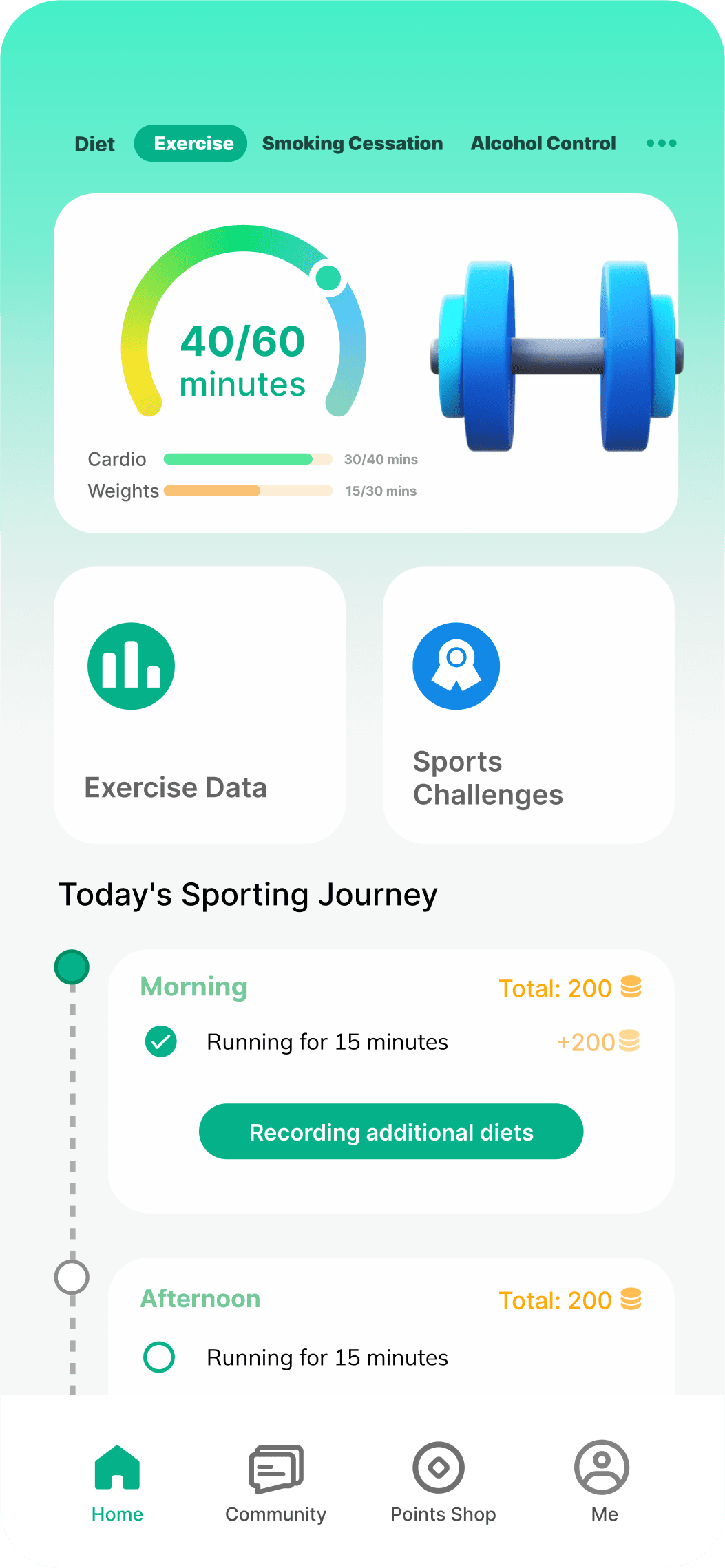
Login & Register
Users can sign in or register on this page and retrieve their passwords. In order to simplify the registration process, users are provided with the option to sign in quickly using their Google account. New users will be redirected to the guidance and questionnaire page after successful registration, while existing users will be redirected to the homepage after successful login.
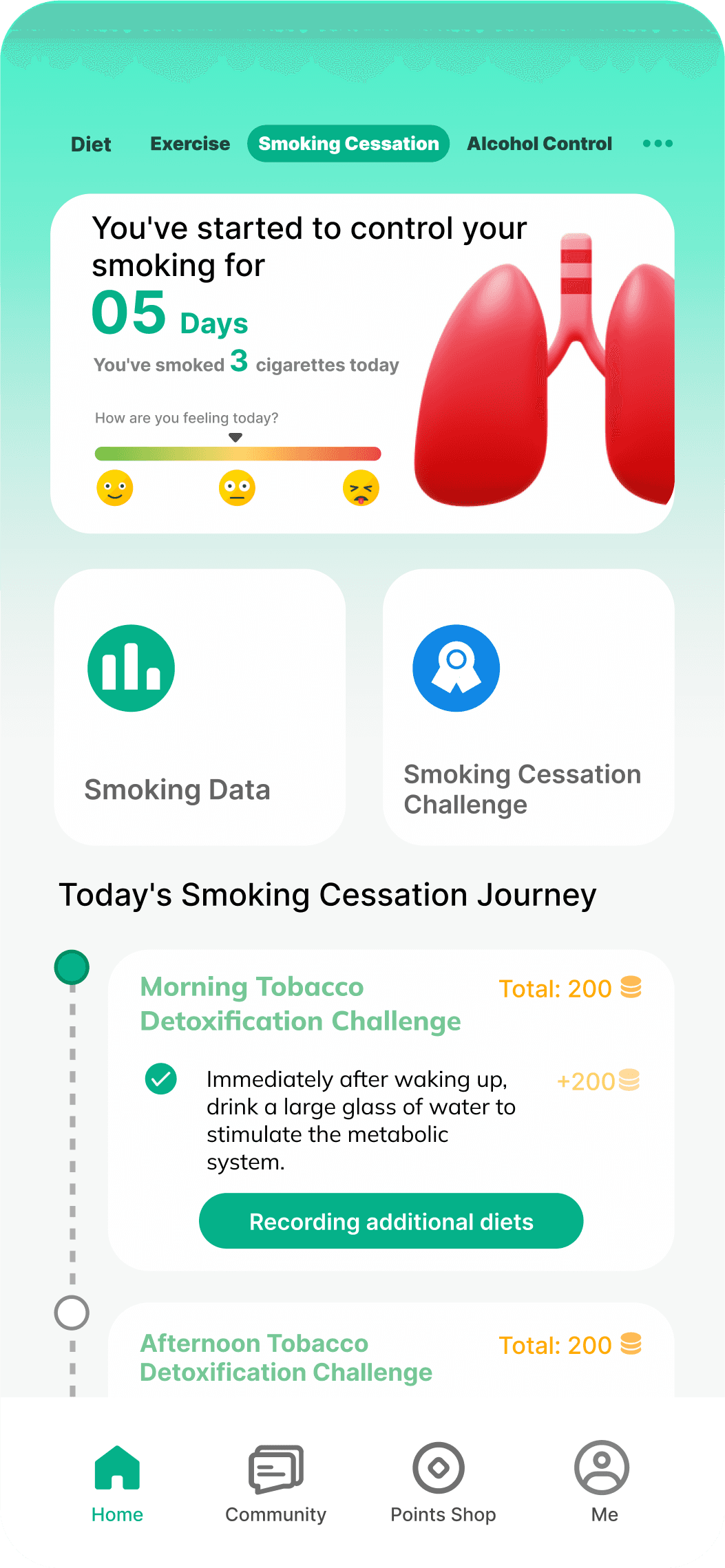
Login & Register
Users can sign in or register on this page and retrieve their passwords. In order to simplify the registration process, users are provided with the option to sign in quickly using their Google account. New users will be redirected to the guidance and questionnaire page after successful registration, while existing users will be redirected to the homepage after successful login.
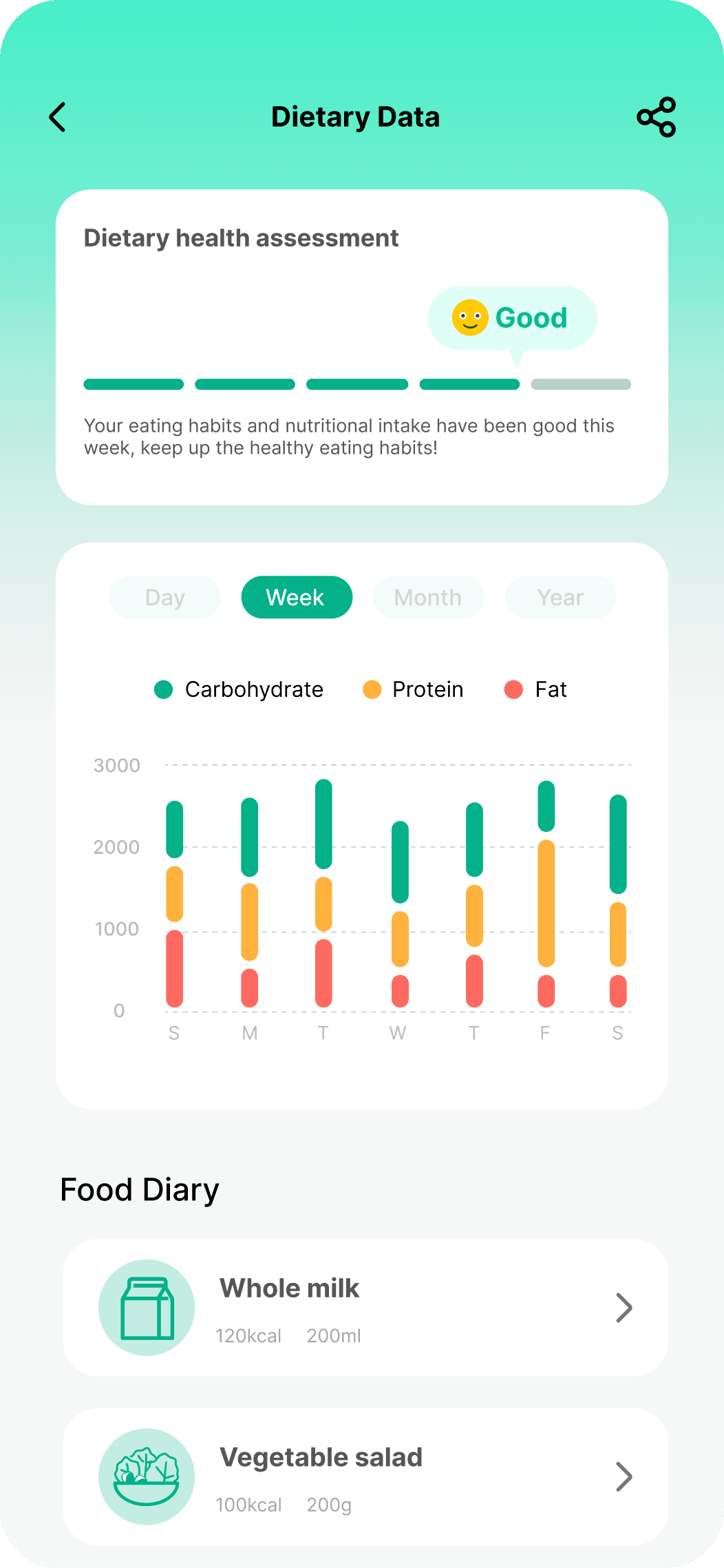
Login & Register
Users can sign in or register on this page and retrieve their passwords. In order to simplify the registration process, users are provided with the option to sign in quickly using their Google account. New users will be redirected to the guidance and questionnaire page after successful registration, while existing users will be redirected to the homepage after successful login.
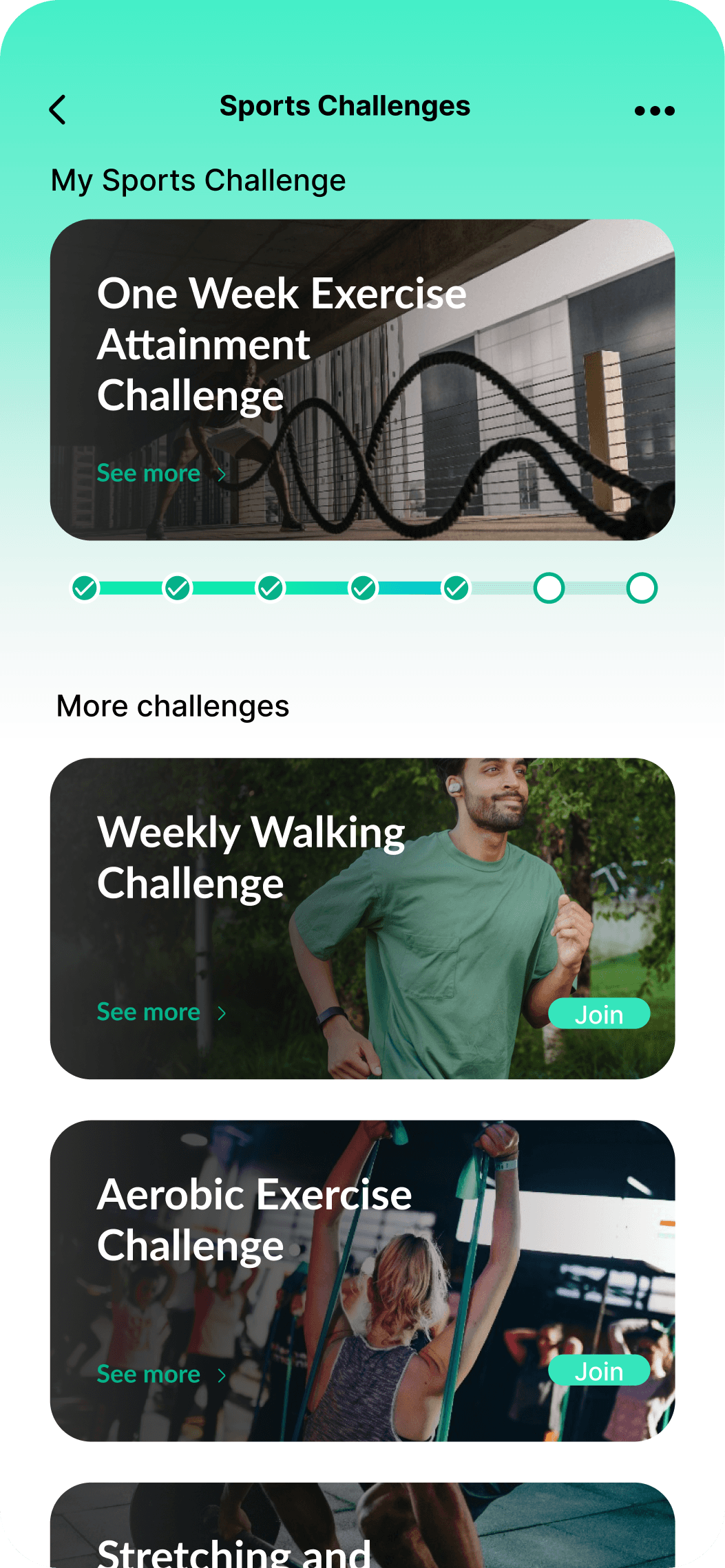
Login & Register
Users can sign in or register on this page and retrieve their passwords. In order to simplify the registration process, users are provided with the option to sign in quickly using their Google account. New users will be redirected to the guidance and questionnaire page after successful registration, while existing users will be redirected to the homepage after successful login.
Login & Register
Users can sign in or register on this page and retrieve their passwords. In order to simplify the registration process, users are provided with the option to sign in quickly using their Google account. New users will be redirected to the guidance and questionnaire page after successful registration, while existing users will be redirected to the homepage after successful login.
Login & Register
Users can sign in or register on this page and retrieve their passwords. In order to simplify the registration process, users are provided with the option to sign in quickly using their Google account. New users will be redirected to the guidance and questionnaire page after successful registration, while existing users will be redirected to the homepage after successful login.
Login & Register
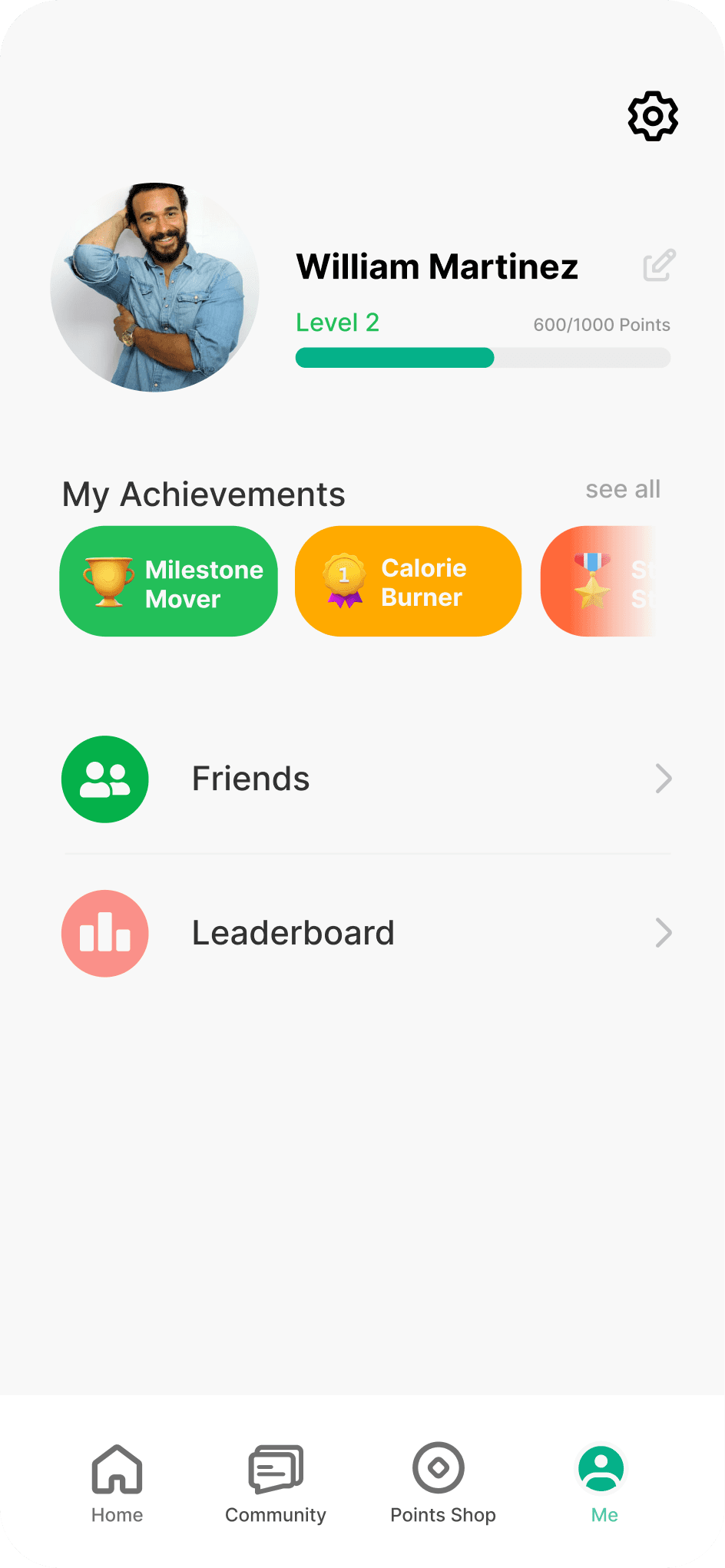
Users can sign in or register on this page and retrieve their passwords. In order to simplify the registration process, users are provided with the option to sign in quickly using their Google account. New users will be redirected to the guidance and questionnaire page after successful registration, while existing users will be redirected to the homepage after successful login.